
St. Louis Travel Guide: Bret Hedican's Blues Years

I got drafted by the St. Louis Blues in 1988, 198th overall, tenth round, a round the league doesn't even hold anymore. Three years later I made my NHL debut with them, and St. Louis is where I found out what this league actually asks of you. This guide covers what I remember from those three seasons, plus what a visitor can see and do there today that my rookie schedule never left room for.

Bret's Stop In St. Louis
I spent three seasons with the Blues before a trade sent me to Vancouver in March of 1994. One thing I want to get right up front, because I hear this mix-up a lot. People assume I played in front of the team's current building, Enterprise Center downtown. I did not. That arena did not open until October of 1994, months after I was already gone. My games were at the old St. Louis Arena on Oakland Avenue, the building everybody in town called The Barn. It came down in 1999. If you are picturing my rookie season, picture that building instead.
St. Louis is where I found out what it actually took to play in this league.
Go see where they play now anyway. Outside Gate 2 at Enterprise Center, three bronze statues stand in the Hall of Fame Plaza, Bernie Federko, Al MacInnis, and Brett Hull, and a Champions Walk of engraved bricks runs alongside it, installed in 2020 to mark the Blues' first Stanley Cup in 2019, the year this city sang "Gloria" until it lost its voice. The room that started my story is gone. That is exactly why it matters that people know where to look for it.
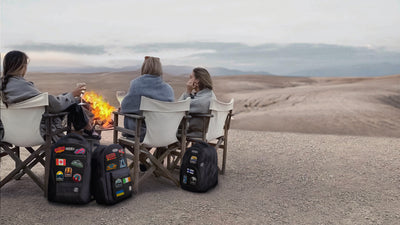
This city is the first stop in a series I am building with the HEDi-PACK, working through the cities that shaped my career and pairing each one with the trip a fan or a traveler could take today.
Getting Around St. Louis
You will most likely fly into St. Louis Lambert International, about fifteen minutes northwest of downtown. The MetroLink Red Line runs directly from the airport terminals into the city center, and the ride itself takes roughly 30 to 35 minutes. It is the easiest way in if you are staying downtown, and it beats renting a car you will not need.
Downtown, Forest Park, and the arena all sit on the MetroLink line, with the Civic Center stop directly across the street from Enterprise Center. For the neighborhoods that make the trip worth it, The Hill, Soulard, the Central West End, you will want a car or a short rideshare. The distances are bigger than they look on a map.
One Local Rule
St. Louis runs on neighborhoods, not one long strip. Pick two or three and go deep rather than trying to cross the whole city in a day.
What Should I Pack For A Trip To St. Louis
A rookie season teaches you to pack light and pack smart. A few things I would tell anyone heading to St. Louis, beyond the obvious:
- A real layer for the evenings. The riverfront wind off the Mississippi cools things down fast, even in summer.
- Shoes that can handle real walking. Forest Park covers more ground than people plan for.
- Cash in small bills. A lot of the best spots on The Hill still run cash-preferred.
- Something to carry food out in. You are not leaving The Hill with just what fit in your stomach.
Worth Knowing
The Hill is still a working Italian-American neighborhood, not a district built for visitors. Give it a full afternoon and let it move at its own pace.
Where To Stay In St. Louis
Downtown puts you within walking distance of Enterprise Center and the Gateway Arch, with the MetroLink stop at Civic Center right there. If you want a slower pace and better restaurants within walking distance, the Central West End is the call, and it sits right against Forest Park.
Where To Eat In St. Louis
Start with toasted ravioli. It came out of The Hill, and nobody fully agrees on who invented it first. St. Louis Magazine dug into old newspaper archives and found a "Try Our Toasted Ravioli" ad from January 1943 tied to what's now Mama's on the Hill, which predates the rival claim from Charlie Gitto's. Both restaurants still serve it, both still tell their version of the story, and that rivalry is part of the fun of eating there. Here is a home version worth trying before you go, or making again once you are back.
From there, get a slice of St. Louis-style pizza, thin and cracker-crisp, topped with Provel instead of mozzarella. Imo's is the name most associated with it. KCUR put it well when they called it the style everyone loves to hate, and people from St. Louis genuinely do not care what the rest of the country thinks about their pizza.
Pappy's Smokehouse is the other line worth standing in. Their ribs have been voted the best in America by the Food Network, and the wait moves faster than it looks. Save room for gooey butter cake, and if you have time for a detour, drive out to Ted Drewes on old Route 66, family-run since 1930, for a "concrete," a custard shake blended so thick they hand it to you upside down to prove it.
Key Takeaways
- Toasted ravioli's origin is a genuine, friendly rivalry between two Hill restaurants, not a settled fact
- St. Louis-style pizza uses Provel cheese, not mozzarella, and it is a locally beloved, nationally divisive dish
- Pappy's Smokehouse and Ted Drewes are both worth the wait, and both are St. Louis institutions in their own right
What To See In St. Louis
The Gateway Arch is the first thing anyone pictures when they think of this city, and it has been an official national park since 2018, when it was redesignated from Jefferson National Expansion Memorial. At 630 feet, it is the tallest man-made monument in the Western Hemisphere, and it is the real thing down to a Junior Ranger badge and a passport cancellation stamp at the visitor center for anyone who collects those. The tram ride to the top is worth the wait.

The Cathedral Basilica of Saint Louis, in the Central West End, holds one of the largest mosaic collections in the world, more than 41 million pieces of glass covering the domes and walls in gold, blue, and red. It is free, it is quiet, and it is genuinely staggering in person.
Forest Park is bigger than most people expect, roughly 500 acres larger than Central Park, and it hosted the 1904 World's Fair. The zoo, the art museum, and the science center inside it are all free. Steinberg Rink, on the park's east side, is normally the largest outdoor ice rink in the Midwest, though it is closed for a renovation project as of this writing, so check current status before planning around it. If you want a stop with more history behind it, the Ulysses S. Grant National Historic Site is about ten miles out, preserving the estate where Grant lived before the Civil War. It is also free and has its own Junior Ranger badge.
Before You Go
Watch. Meet Me in St. Louis (1944), Judy Garland and the 1904 World's Fair, and the version of the city it still likes to remember itself as.
Listen. Chuck Berry was born here and is buried here, at Bellerive Gardens Cemetery. Put on "Johnny B. Goode" before you walk the Delmar Loop.
Know. St. Louis calls itself the Gateway to the West for a reason. Everyone who headed out to build something started by passing through here. Fitting, for the first stop in this series.
The Patch For This City
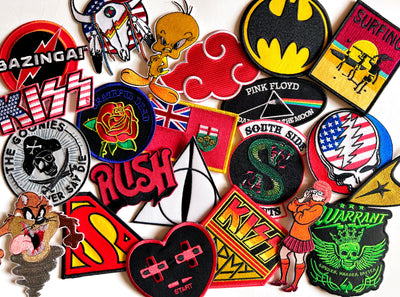
For St. Louis, I am carrying two patches. The Officially Licensed NHL® St. Louis Blues patch marks where my NHL career actually began. Alongside it, the Gateway Arch National Park patch covers the city itself, since the Arch is the one symbol everybody associates with St. Louis. We do not currently carry a Saint Louis University or Washington University patch, or a city flag or fleur-de-lis design, though those would round this set out well.

Every city I played leaves a mark. St. Louis is where the collection starts, the first stitch in a story you build one place at a time. Sew it on the pack, and carry the beginning with you.
Frequently Asked Questions
Q: Where did Bret Hedican play his NHL home games in St. Louis?
Bret Hedican played his St. Louis Blues home games at the old St. Louis Arena, known locally as The Barn, which was demolished in 1999. The Blues did not move into what is now Enterprise Center until October 1994, months after Hedican had already been traded to Vancouver.
Q: What is the best neighborhood to stay in for a St. Louis visit?
Downtown is the most convenient base for visitors who want to be near Enterprise Center and the Gateway Arch, with MetroLink access at the Civic Center stop. The Central West End offers a quieter, more residential feel with strong restaurants and easy access to Forest Park.
Q: What food is St. Louis known for?
St. Louis is best known for toasted ravioli, which originated on The Hill neighborhood, along with thin-crust pizza topped with Provel cheese, gooey butter cake, and barbecue from spots like Pappy's Smokehouse.
Q: Is the Gateway Arch a national park?
Yes. The Gateway Arch has been an official national park since February 2018, when it was redesignated from Jefferson National Expansion Memorial. At 630 feet, it is the tallest man-made monument in the Western Hemisphere, and it offers a Junior Ranger program and a passport cancellation stamp.
Q: Is Forest Park worth visiting?
Yes. Forest Park is roughly 500 acres larger than New York's Central Park and was the site of the 1904 World's Fair. It holds the St. Louis Zoo, the St. Louis Art Museum, and extensive walking trails, all free to enter.